Admissibility of 3D Evidence: Legal Standards & Defensibility
Join Us Virtually
* Registration open until 6/2/26 at 12:00 AM (EDT)
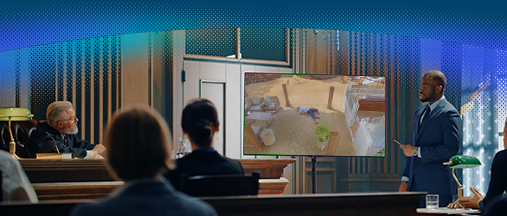
As 3D documentation becomes more common in litigation, attorneys must evaluate not just its persuasive value but its admissibility and defensibility under established evidentiary standards. This CLE‑eligible webinar examines how courts assess 3D evidence, the foundation required for admission, and the key considerations attorneys should understand when using—or challenging—3D data in civil and criminal matters.
Key Takeaways:
- Evidentiary Foundations for 3D Evidence: How courts evaluate relevance, reliability, authentication, and methodology when admitting 3D documentation.
- Defending (or Challenging) 3D Evidence: Common legal challenges raised during deposition and trial, and how accuracy, methodology, and chain of custody are examined.
- Effective Courtroom Use: Practical considerations for presenting complex 3D evidence in a way that is clear, credible, and compliant with evidentiary rules.
This session is designed to help attorneys make informed decisions about the strategic use of 3D evidence—from admissibility through trial presentation.
Thank you to our webinar sponsor!

Eligibility
NDAA’s mission to serve and support prosecutors and their staff. In consideration of this commitment, NDAA requires that all those in attendance of our programs currently work in or work closely with prosecution: NDAA invites prosecutors, lawyers and paralegals in local, state, tribal, federal and military government attorneys’ offices. If you are not sure about your eligibility, please contact training@ndaajustice.org.
Questions?
Please contact training@ndaajustice.org.
| Price | |
|---|---|
|
Member Ticket
Registration Ends 6/2/26 at 12:00 AM EDT
|
FREE |
| Price | |
|---|---|
|
Non-Member Ticket
Registration Ends 6/2/26 at 12:00 AM EDT
|
FREE |
Anticipated Continuing Legal Education Credits 3 hours
NDAA will apply for CLE credit in Illinois, Kansas, Mississippi, Missouri, Ohio, Pennsylvania, Tennessee, Texas, and Virginia based on state requirements and guidelines. All other attorneys seeking CLE credit should contact their state bar for more information. At the conclusion of the course and after completion of the electronic evaluation survey, all attendees will receive a uniform continuing education certificate that they may use to report their continuing education hours to their state bar or reporting agency. Questions regarding CLE can be directed to cle@ndaajustice.org
At NDAA, we want every participant to be able to fully engage in our training programs. If you need an accommodation, please contact us at training@ndaajustice.org. We are committed to working with you to create an accessible and inclusive learning environment.
To help us make appropriate arrangements, we ask that requests be submitted at least three (3) business days in advance of virtual programming and two (2) weeks in advance of in-person programming whenever possible. While we will make every reasonable effort to honor all requests, advance notice allows us the best opportunity to ensure the necessary supports and services are in place.
For More Information:
Presenters:
Brenda S. Butler is a seasoned forensic and public safety expert with 20+ years of experience supporting law enforcement and prosecutors. She is a court‑recognized expert in crime scene reconstruction, bloodstain pattern analysis, shooting incidents, and 3D forensic technology.
Formerly with the Ohio Attorney General’s BCI, she has assisted DAs nationwide, including overcoming Daubert, Shreck, and related evidentiary challenges.
Currently at FARO INSIGHT, she leads national training and supports the effective use of 3D evidence in court.
Russell Boynton is a nationally recognized collision reconstruction expert with over 40 years of experience in law enforcement and forensic investigation. As Senior Field Applications Engineer at FARO INSIGHT, he has spent the past nine years training public safety professionals worldwide in 3D laser scanning for crash, crime and fire scene documentation. His expertise includes crash data retrieval, forensic diagramming, drone photogrammetry and courtroom-ready deliverables.
Ross Benik is a 13‑year veteran of the Denver Crime Scene Unit with deep expertise in applying advanced forensic technology to investigations and the courtroom. He is a leading expert in FARO 3D laser scanning, creating precise 3D reconstructions of complex crime scenes. Ross has extensive experience testifying as an expert witness, successfully defending the scientific validity and admissibility of 3D evidence. His work helps prosecutors clearly and effectively present spatial evidence to the trier of fact.